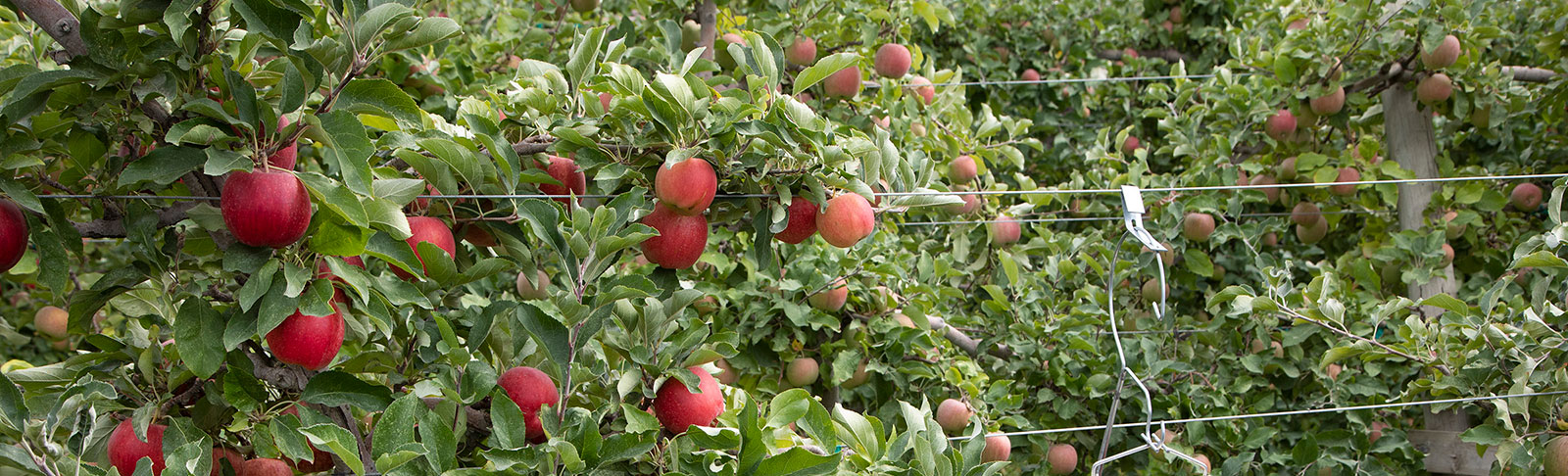
The Second Generation of codling moth is underway across many Washington orchards as degree day accumulations continue to rise.
As of July 17th, here’s how the average degree days are currently looking based on the Semios network of in-canopy weather stations:
-
Northern Washington: ~1634 codling moth degree days
-
Central Washington: ~1585 codling moth degree days
-
Southern Washington: ~1776 codling moth degree days
Depending on the location, most orchards in Washington are in the second generation egg hatch window, marking a critical period for protecting fruit from codling moth damage.
Trap captures vary by location and management program. Growers should continue to track trap counts alongside degree day models to ensure spray applications are optimally timed.
Streamline pest decisions with the new Semios Pest Dashboard
The new Semios pest dashboard brings this data into one place allowing growers and crop advisors to quickly access pest pressure and treatment timing without having to piece together information from multiple sources.
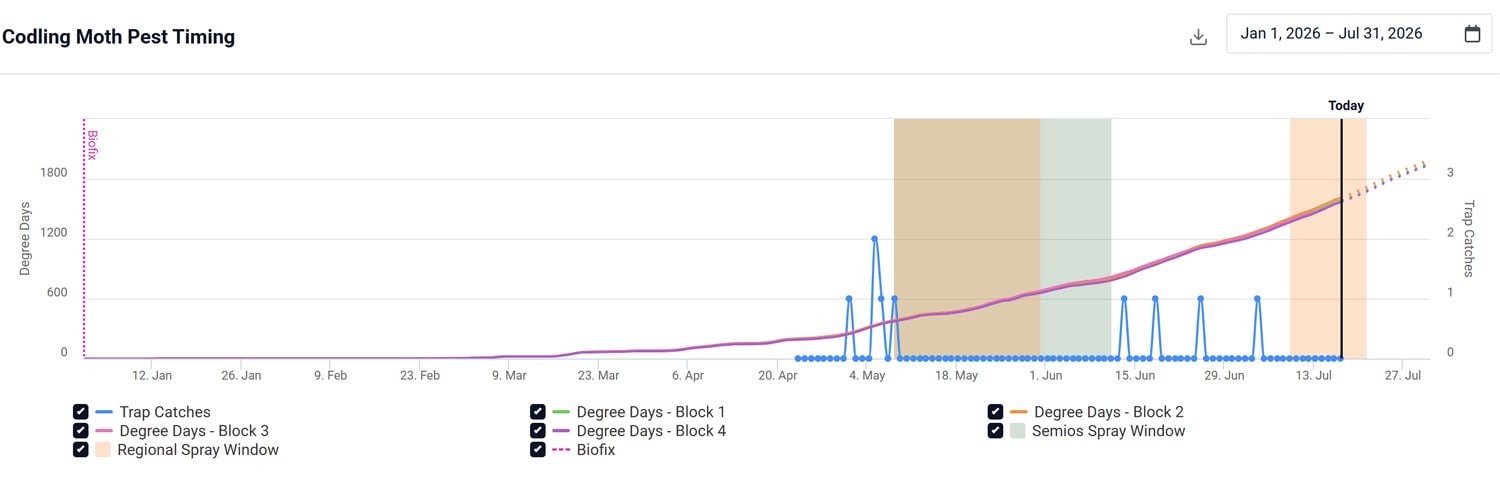
Example of a codling moth dashboard in Semios Hub
This dashboard combines the following information:
-
Degree day accumulation
-
Trap catches
-
Biofix dates
-
Recommended spray windows
The graph allows growers to compare degree days with pest development stages while also highlighting treatment windows to make planning sprays easier.
You can also use the dashboard to compare multiple weather stations within the same orchard. Because pest development is temperature driven, degree day accumulation and hence pest pressure can vary significantly across different microclimates in the same orchard. This feature allows growers to identify which areas in the orchard are developing faster to better manage spray timing across the orchard.
The dashboard also features a historical trap counts table that shows a summary of pest activity. The table shows total catches from today, past 7 days, past 14 days and year to date. This allows growers to catch hotspots and determine if additional management is required, helping make data-driven pest management decisions throughout the season.
Learn how to access the new pest dashboard feature in Semios Hub.
Stay proactive in protecting against the summer heat
With temperatures rising across Washington, it’s important to also start cooling trees to prevent sunburn and protect fruit quality.
Accurate in-orchard weather data helps determine when cooling conditions are met and supports more efficient water use. Semios in-block weather stations provide accurate, real-time temperature data that gives growers the confidence to make proper cooling decisions. By watching the 14-day forecast and setting temperature-based alerts, Semios users can stay proactive in taking protective measures against the summer heat.