A wide range of tools is available today in the industry for soil moisture monitoring. It’s easy to assume they all measure the same thing, but they don’t. Some tools measure soil water tension, while others measure soil moisture, and these two measurements behave very differently in the field.
The distinction matters because growers rely on moisture monitoring to plan their irrigation schedule. When a sensor measures tension, but is presented as a moisture tool, readings may not be useful to a grower. That can make it harder to interpret trends or trust the data guiding irrigation scheduling. Understanding what your sensor actually measures helps ensure the information you use is supporting the way you irrigate.
In this article, we'll break down the differences between soil tension and soil moisture, why it matters, and how to choose the right solution.
What is soil tension?
Soil water tension reflects the effort required for plant roots to pull water from the soil. As the soil dries, that effort increases. Tension sensors use the tensiometric method, detecting the vacuum pressure that forms as roots draw water toward themselves.
How soil tension readings behave
- Wet soil → low tension
- Dry soil → high tension
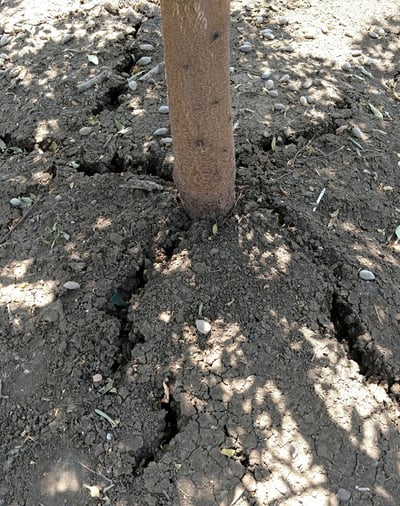 Example of a very dry, cracked soil
Because the scale increases as the soil dries, it can feel “backwards” for anyone expecting moisture-style readings.
If roots aren’t actively pulling water, tension can remain low even when water is present. The sensor reads plant effort, not soil water content.
Tension tools can be effective for spotting plant stress or managing small areas, but the reading does not directly indicate how much water is stored in the soil profile.
What is soil moisture?
Soil moisture indicates how much water is present in the soil profile, essentially showing how full the “bucket” is at different depths. Unlike tensiometers, soil moisture sensors don’t depend on plant roots pulling water to generate a reading.
How soil moisture readings behave
- On a scale from 0-100%, where 0% means dry and 100% means completely saturated.
A soil moisture probe reports available water content and depth of infiltration after irrigation. These sensors offer a more direct view of what growers typically want to know: How much water is in my soil, and how is it changing through the season?
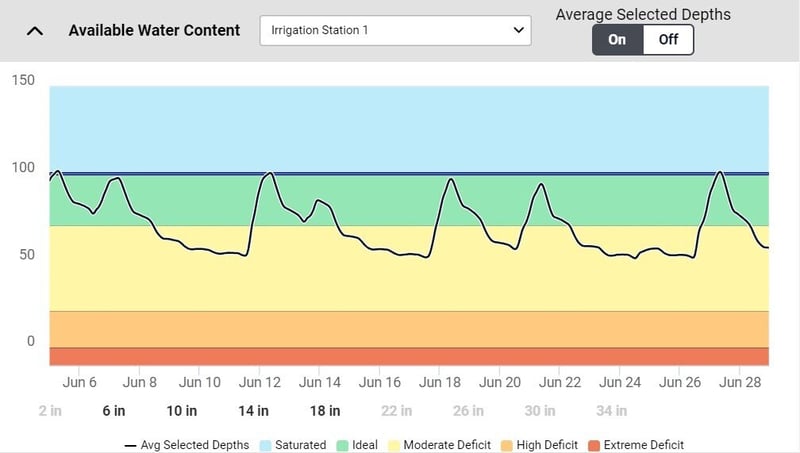
An available water content graph like this one on the Semios app transforms raw soil moisture data into a tool that helps irrigation managers and growers know how much to irrigate to keep their crop in an optimal state.
Which measurement fits your needs?
Soil water tension:
Tensiometers are used to measure soil tension; here are the pros and cons of using them.
Pros
- Lower sensor cost: Basic tensiometer sensors can cost around $30 each, making entry-level systems affordable
- Long-established technology: Over a century of use means many agronomists are familiar with the approach
Cons:
- Counterintuitive scale: The backward numbering system (high number = dry, low number = wet) confuses many users.
- Only reads with active plant uptake: If plants aren't pulling water, readings may show zero even when the soil is dry, giving false confidence.
- Regular maintenance required: Sensors need replacement approximately every three years.
- Can lose calibration: If the soil gets too dry and breaks the suction, tensiometers must be reinstalled
- Indirect measurement: You're not measuring water content; you're measuring how hard it is to get it, which requires interpretation
Soil moisture:
Soil moisture probes are used to measure soil moisture; here are the pros and cons of using them.
Pros:
- Intuitive readings: When you see 35% soil moisture, you immediately know what that means. The data directly answers "how much water is in my soil?"
- Continuous, direct measurement: Shows the actual water content, whether plants are actively getting water or not
- Clear decision-making: Easy to determine when you've hit your depletion threshold and need to irrigate
Cons:
- Higher initial cost: Quality soil moisture probes typically cost more upfront than basic tensiometers
- Calibration needs: Probes require calibration to produce accurate data. However, to overcome this, Semios auto-calibrates the data received from soil moisture probes.
- Installation: Installing probes correctly is important for long-term reliability. But, working with a provider like Semios means field technicians can handle installation and maintenance.
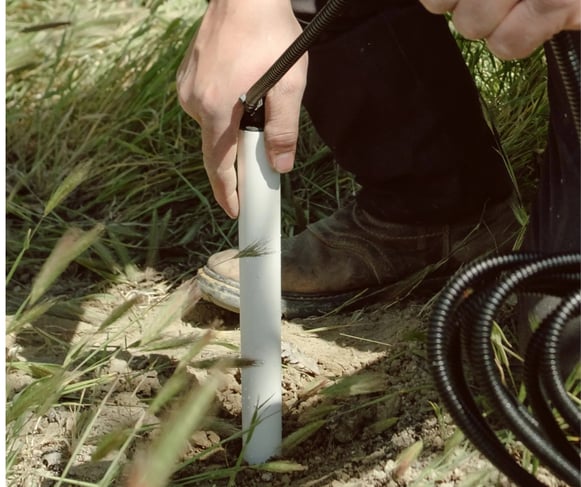
A Semios field technician installing a soil moisture probe in an orchard
Choosing the right tool: Questions growers should ask
This isn't about one technology being better than the other. It's about choosing the right tool for your needs and operations.
Ask yourself:
- Do I want to measure how much water is in the soil?
- Which type of data will be easiest for my team to interpret and use consistently?
- How important is long-term reliability and minimal maintenance?
- Consider your total cost of ownership—not just purchase price, but replacement cycles and maintenance time.
Wrap up
Soil tension and soil moisture tools often get grouped together, but they measure very different things:
- Soil tension reflects the force that plant roots must exert to extract water from the soil.
- Soil moisture shows how much water is available in the soil.
Choosing the right measurement helps growers reduce uncertainty, plan an irrigation schedule efficiently, and protect crop health.
If you’d like to talk through how soil moisture monitoring works within Semios, our team is here to help.